How to track Pokemon card value: a five-step method
A collection total becomes useful only when every card points back to a comparable printing, condition, source, and date.
Four Obsidian Flames cards can all say Charizard ex, yet they do not belong in one value row. The reliable way to track Pokemon card value is to record five things together: the specific card, condition, language, price source and observation date. Miss one and a precise-looking collection total can still be wrong.
This guide was reviewed on September 30, 2026. It explains a method, not a promise that a card will sell for the displayed reference. If you need to find the cards first, start with how to organize Pokemon cards.
Step 1: identify the specific card
A name is not an identity. Set, collector number, finish and language decide which market evidence belongs to your copy. These eight cards make a useful stress test because two names produce eight separate price records:
| Card | Set | Collector number | Rarity |
|---|---|---|---|
| Charizard ex 125/197 | Obsidian Flames | 125/197 | Double Rare |
| Charizard ex 215/197 | Obsidian Flames | 215/197 | Ultra Rare |
| Charizard ex 223/197 | Obsidian Flames | 223/197 | Special Illustration Rare |
| Charizard ex 228/197 | Obsidian Flames | 228/197 | Hyper Rare |
| Pikachu ex 057/191 | Surging Sparks | 057/191 | Double Rare |
| Pikachu ex 219/191 | Surging Sparks | 219/191 | Ultra Rare |
| Pikachu ex 238/191 | Surging Sparks | 238/191 | Special Illustration Rare |
| Pikachu ex 247/191 | Surging Sparks | 247/191 | Hyper Rare |
All eight identities were reconciled against the reviewed Unbinder catalog on September 30. The official Obsidian Flames checklist (opens in a new tab) and Pokemon's current Surging Sparks records for Pikachu ex 057/191 (opens in a new tab), Pikachu ex 219/191 (opens in a new tab), Pikachu ex 238/191 (opens in a new tab) and Pikachu ex 247/191 (opens in a new tab) provide the primary identity check. Pokemon's card database identifies cards; it does not appraise them.
Card showcase
Two printings that need their own value records
Check the set and collector number, compare prices from each marketplace, and decide whether the card belongs on your wishlist or in your binder. One active listing is never the whole market.
Some marketplace links may earn us a commission at no extra cost to you. Compare condition, language, shipping, taxes, and sold results before buying.
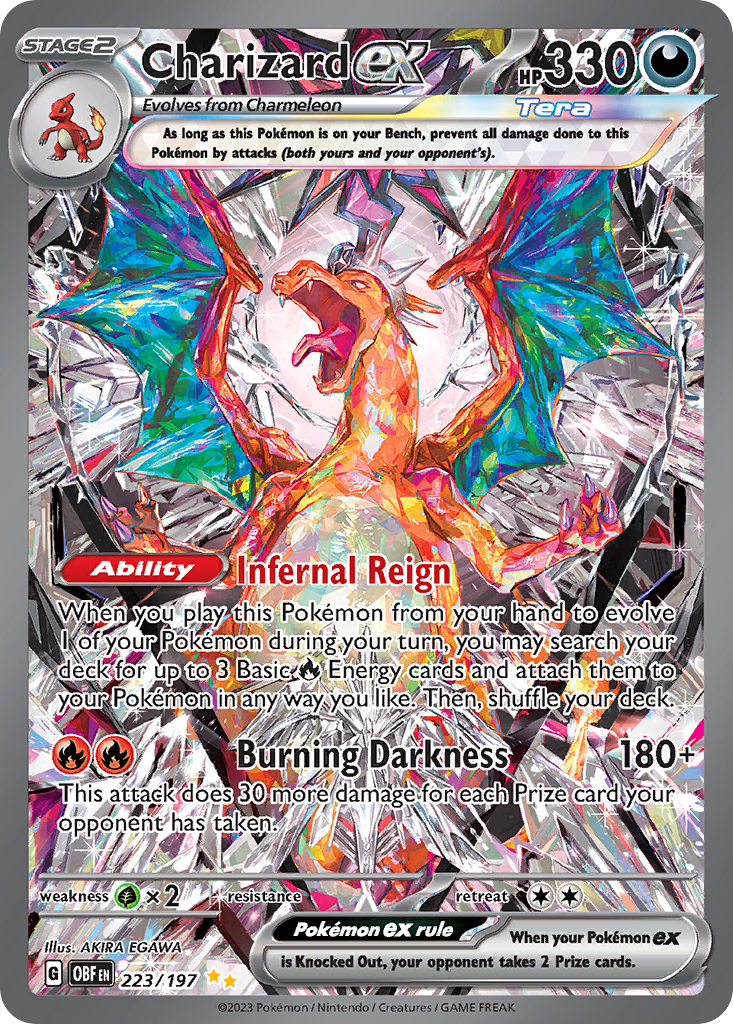
Charizard ex
Special Illustration Rare · EN
Use as a cross-source benchmark: movement matters more when TCGplayer, Cardmarket, and eBay agree.
Marketplace price check
Checking saved data



Next step: Confirm the card version and condition before comparing prices.
Catalog source: Pokemon TCG API card record - Reviewed 2026-07-09
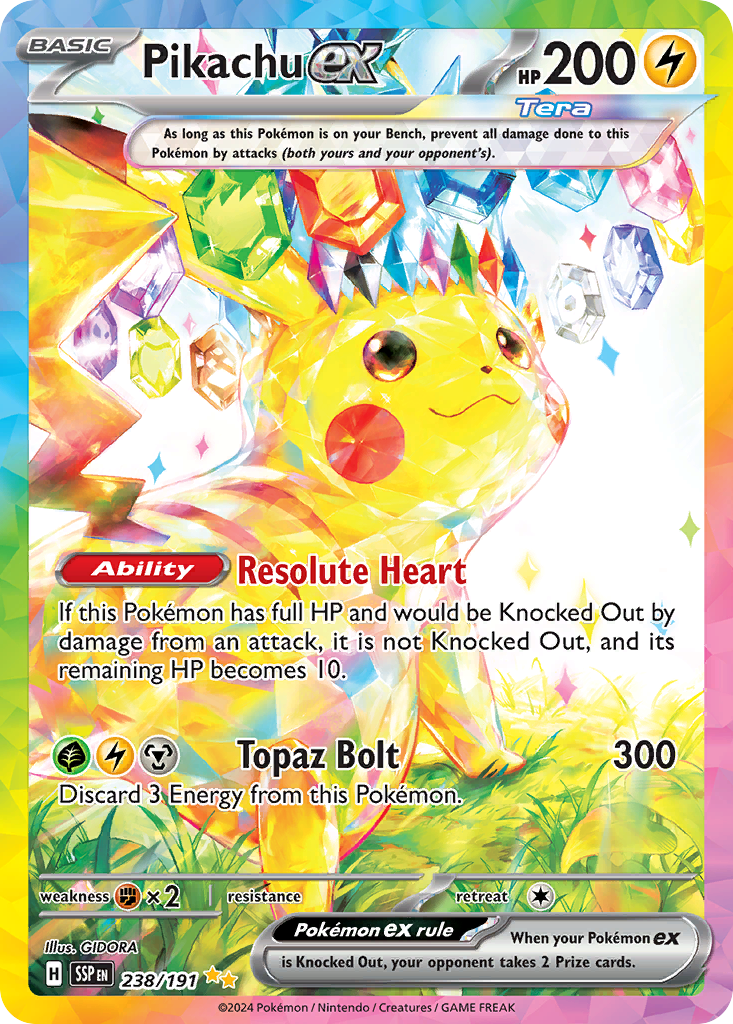
Pikachu ex
Special Illustration Rare · EN
High-attention modern chase card where sentiment can run ahead of clean sold comps.
Marketplace price check
Checking saved data
Next step: Put it on a wishlist before reacting to a spike.
Catalog source: Pokemon TCG API card record - Reviewed 2026-07-13
Step 2: choose the evidence that answers your question
Do not average unlike numbers. An active listing, a completed sale and a market-price calculation describe different evidence.
| Question | Useful starting point | What to record |
|---|---|---|
| What have recent US buyers paid? | TCGplayer Market Price or comparable completed sales | Source, metric, condition, printing and USD date |
| What is currently available in Europe? | Cardmarket listings and price trend | Language, condition, seller country, shipping and EUR date |
| What did a similar raw or graded copy sell for? | eBay sold results | Matching card, sale date, grade or raw condition, and shipping context |
| What is one seller asking? | The active listing itself | Treat it as supply evidence, not a completed price |
TCGplayer's current definition (opens in a new tab) says Market Price is compiled from recent completed sales for the selected printing and condition. Cardmarket's price pages (opens in a new tab) are European marketplace context. eBay's trading-card condition guide (opens in a new tab) separates graded from raw cards and makes condition part of the comparison.
Price source compare
Choose a source by the evidence you need
Each marketplace tells you something different about pokemon singles. Compare the same card number, language, and condition before you decide what a card is worth to you.
Some marketplace links may earn us a commission at no extra cost to you.
| Source | Best for | Evidence | Active-listing noise |
|---|---|---|---|
TCGplayer Unbinder-reviewed marketplace context · Reviewed 2026-07-09 Research on TCGplayer | US English raw-card marketplace context and recent-sale signals. | Marketplace price points that still need exact card, condition, and printing checks. Try this: Save the card in Unbinder, then add the marketplace and date only after the product page matches. | Thin-volume cards, non-English copies, graded slabs, and scarce variants need a second source. |
Cardmarket Unbinder-reviewed marketplace context · Reviewed 2026-07-09 Research on Cardmarket | European marketplace context, language variants, and EUR supply checks. | Regional marketplace references that need currency, shipping, seller country, and condition context. Try this: Use Unbinder notes to mark language, region, and the date you checked the Cardmarket context. | Do not turn EUR context into a US value without conversion and shipping notes. |
eBay Unbinder-reviewed sold-listing context · Reviewed 2026-07-09 Research on eBay | Sold-price comps for slabs, sealed, Japanese cards, promos, and scarce variants. | Public sold-result context, useful only after mismatched listings and outliers are removed. Try this: Record sold-result date, condition, language, grade, and whether shipping was included. | Active-listing noise: unsold asking prices are not evidence that buyers paid that amount. |
Source details were last checked on the dates shown.
Step 3: keep condition, language and currency separate
Near Mint and Lightly Played should not share a price row. Neither should raw and PSA 10, English and Japanese, or USD and EUR. If the source uses a broad condition bucket that does not match your card, keep the source number as a reference and mark the mismatch instead of silently treating the cards as equivalent.
Be conservative when condition is uncertain. A lower estimate with an honest condition note is more useful for a trade or insurance review than an inflated total built from the cleanest copy you found online.
Step 4: attach the metric and date
Write `TCGplayer Market Price, Near Mint, USD, 30 September 2026`, not just `$100`. The label lets you compare like with like at the next review. It also stops a Cardmarket asking average or one eBay sale from being mistaken for the same metric.
The chart below reads stored 90-day history for Pikachu ex 247/191. It does not refresh a marketplace when you open this page, and it does not predict the next sale. Use the shape of the series to decide whether today's reference is typical, unusually high or unusually low for this specific card.
Stored price history
Pikachu ex 247/191: stored 90-day market history
Compare saved marketplace observations for this card. Each source uses its own currency and pricing method.
- Latest stored value
- Checking saved data
- Change in window
- Checking saved data
- Data points
- Checking saved data
Price history · Near Mint market reference · 90-day window. Values are not refreshed by this page view.
Step 5: review changes, not just the total
A collection total can move because prices changed, because you added cards or because one card was matched to a different printing. Keep those causes separate. When the total jumps, check the largest card-level changes before assuming the whole collection moved.
A monthly review is enough for most binders. Review sooner when you are preparing an insurance record, an expensive trade or a sale. For wishlist targets, compare several observations rather than treating one spike as a new normal.
A five-line value record you can repeat
For every card worth tracking individually, keep this minimum record:
- Set, name, collector number, finish and language.
- Raw condition or grading company, grade and certificate number.
- Marketplace, source-native metric and currency.
- Observation date and the comparable evidence you checked.
- Quantity, purchase price if known, and the decision the estimate supports.
Run the eight-printing table above through any spreadsheet or app you are considering. If it collapses the Charizard or Pikachu rows, loses condition, or replaces the old number without a date, it is not ready for the rest of the binder.
Sources and method
The reviewed modules use Unbinder catalog identities and persisted marketplace history. Article views never trigger an external price refresh. Source-native metrics and currencies stay separate; raw and graded cards are not blended; missing or conflicting observations produce uncertainty rather than a more precise-looking estimate. The Unbinder Market Reference documents the shared identity, storage and review rules.
The displayed figure is an estimate, not cash. Fees, shipping, taxes, exchange rates, buyer demand and the card's actual condition can all change the amount someone pays. Open the named marketplace before an expensive decision.
Make the estimate useful
Value is helpful when it leads to a collector decision: insure a high-value card, compare a trade, wait on a wishlist target or check a duplicate before a show. It should not crowd the artwork, set progress and memories out of the binder.
If your collection is already in Unbinder, keep condition and language beside the exact card and use price history to review movement. The Pokemon card value tracker page shows that product path; this guide remains the method behind it.
Continue this workflow
How the Unbinder Market Reference works