Best Pokemon card sleeves and top loaders by use
Choose the protection job first, then test the sleeve, holder, and binder together before buying or resleeving in bulk.
The best Pokemon card sleeves and top loaders depend on the job. Use a clear standard-size sleeve for binder cards, a soft sleeve inside a regular 3-by-4 inch top loader when a raw card needs rigid support, and the holder your grader currently asks for when preparing a submission. Do not buy a case or resleeve a whole binder until one sleeve, card, holder, and pocket fit without force.
Top loaders are not a replacement for sleeves. The sleeve protects the surface from rubbing. The top loader adds rigidity. Use both when a card is valuable, fragile, trade-ready, or waiting for a longer-term storage decision.
Ultra PRO's current regular top-loader specification (opens in a new tab) lists standard 63.5-by-88.9-mm cards and a maximum 35-point card thickness. Dragon Shield's current standard-size sleeve guide (opens in a new tab) lists cards up to 63 by 88 mm and includes Pokemon among the intended games. We checked both manufacturer pages on September 28, 2026. Those dimensions narrow the shelf; your own fit test decides what belongs in the collection.
Quick recommendations
| Card type | Best protection | Notes |
|---|---|---|
| Bulk commons and uncommons | Penny sleeve or organized storage box | Sleeve cards you care about; do not overprotect true bulk |
| Set binder cards | Standard soft or clear outer sleeve | Keep page pockets cleaner and reduce direct handling |
| Favorite cards | Standard sleeve plus binder | Good balance of protection and browseability |
| Higher-value raw cards | Penny sleeve plus standard top loader | Add team bags for shipping or longer storage |
| Cards handled often | Durable matte or clear outer sleeve | Choose clarity if artwork inspection matters most |
| Master set cards | Consistent sleeve type across the binder | Uniform fit keeps pages neater |
| Cards in transit | Penny sleeve, top loader, team bag, rigid mailer | Storage and shipping are different jobs |
| Cards going to a grader | Current submission-approved holder | Check the grader's rules before packing |
If you are also choosing binder storage, read best binders for Pokemon cards. The sleeve and binder should work together, not fight each other.
Run this five-card fit test first
Test one small group before buying sleeves or holders in bulk:
- Add Charizard ex 223/197 from Obsidian Flames as the textured, higher-value example.
- Add Pikachu 025/165 from 151 once as a regular card and once in the finish you actually collect, such as reverse holo.
- Add a duplicate that will be removed and reinserted more often than the binder copy.
- Add one ordinary binder card whose only job is to reveal tight pockets, clouding, glare, or uneven page thickness.
- Close the binder or holder, leave it flat, reopen it, and check corners, sleeve movement, surface visibility, and removal without pulling on the card.
Repeat that test whenever you change sleeve brand, binder page, inner sleeve, or rigid holder. A size printed on a box cannot prove that the full stack fits your page without pressure.
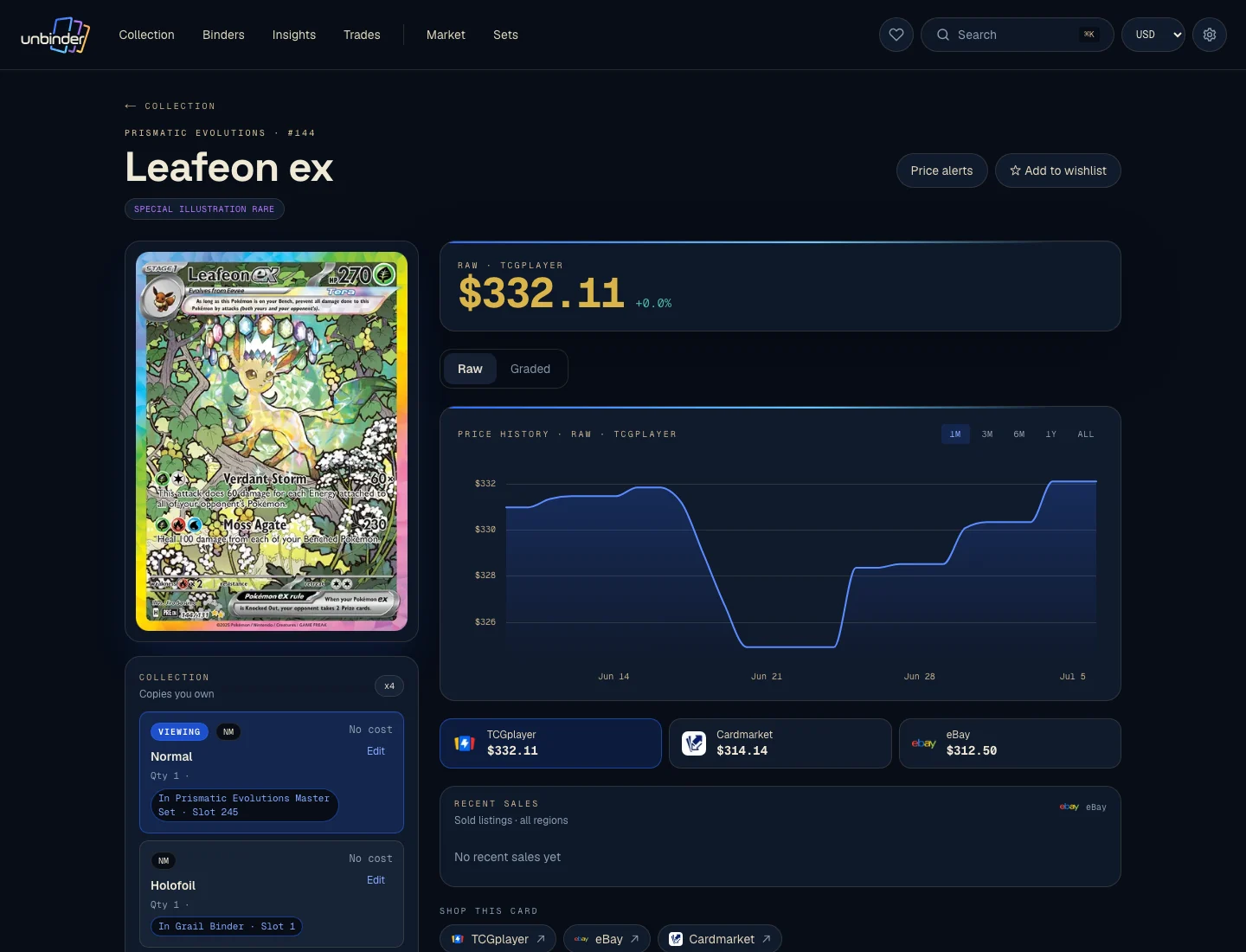
Sleeve the card that would hurt to lose
Sleeve advice gets abstract fast, so pin it to something concrete. A Special Illustration Rare like Charizard ex 223/197 is a useful test of whether a soft sleeve enters a regular top loader cleanly; Pikachu 025/165 from 151 lets you compare a regular binder copy with the finish you actually collect. The card's condition, handling, and destination decide the protection—not a generic price threshold.
Manufacturer specifications are worth checking directly, because a millimetre or an extra sleeve layer can be the difference between a clean fit and a card forced into a pocket. The current official Obsidian Flames card list (opens in a new tab) and 151 card list (opens in a new tab) confirm the two example printings. The Unbinder catalog also resolves them as `sv3-223` and `sv3pt5-25`; neither source tells you that a particular sleeve, finish, and binder combination fits, which is why the physical test still matters.
Card showcase
The card that decides how much sleeve is proportionate
Check the set and collector number, compare prices from each marketplace, and decide whether the card belongs on your wishlist or in your binder. One active listing is never the whole market.
Some marketplace links may earn us a commission at no extra cost to you. Compare condition, language, shipping, taxes, and sold results before buying.
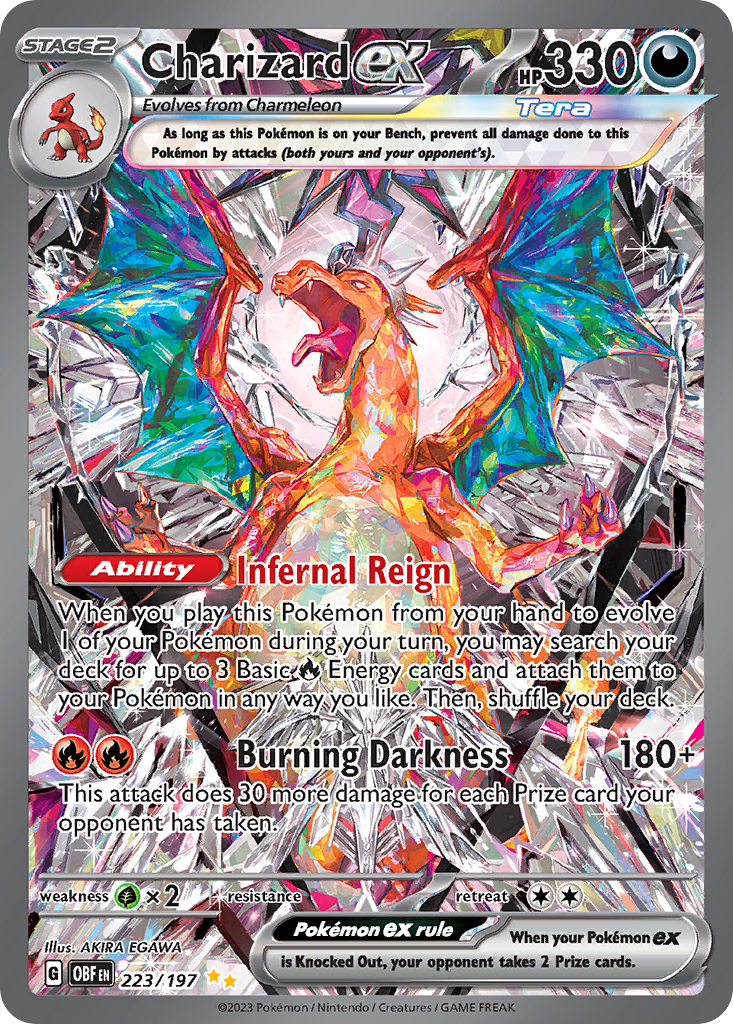
Charizard ex
Special Illustration Rare · EN
Use as a cross-source benchmark: movement matters more when TCGplayer, Cardmarket, and eBay agree.
Marketplace price check
Checking saved data



Next step: Confirm the card version and condition before comparing prices.
Catalog source: Pokemon TCG API card record - Reviewed 2026-07-09
Sleeve sizes for Pokemon cards
Pokemon cards use the standard trading card size, about 63 by 88 mm. For most collectors, that means standard-size sleeves, not Japanese-size sleeves.
Useful sleeve categories:
- Penny sleeves: thin, inexpensive soft sleeves for basic protection.
- Standard outer sleeves: thicker sleeves for binder storage or repeated handling.
- Inner sleeves: tight sleeves used for double-sleeving.
- Matte sleeves: textured sleeves that handle well but can slightly soften the visual clarity of the card.
- Clear sleeves: better for inspecting artwork, holo pattern, and condition.
For collection binders, clear sleeves are usually the cleanest choice. For play decks, shuffle feel matters more. For Pokemon collectors, the card should be easy to inspect without removing it from protection.
Best everyday choice: penny sleeves
Penny sleeves are the basic protection every Pokemon collector should have. They are thin, flexible, and useful for sorting, binder preparation, and placing cards into top loaders.
Use penny sleeves for:
- Pulls from packs before sorting.
- Cards going into top loaders.
- Duplicates you still care about.
- Cards waiting for condition review.
- Low- to mid-value binder cards if the binder pockets fit well.
The main weakness is structure. A penny sleeve does not stop bending, corner pressure, or crushing. It protects against light handling and surface contact, not serious impact.
When sleeving a card, guide the card gently into the sleeve instead of pushing against a corner. If the sleeve feels too tight or catches the edge, use a different sleeve.
Best for binders: standard clear sleeves
For binder cards, a standard clear sleeve is usually the best balance. It is more substantial than a penny sleeve, easier to handle, and still lets you see the card clearly.
Choose clear sleeves for:
- Set binders.
- Master sets.
- Favorite-card binders.
- Cards where condition inspection matters.
- Collections you review often.
Use one sleeve style across a binder when possible. Mixed sleeves can make pages feel uneven, especially if some cards are in thin penny sleeves and others are in thicker deck sleeves.
If the binder pocket feels tight with sleeved cards, do not force it. A tight fit can put pressure on corners and make cards harder to remove safely.
Best premium handling: matte or durable outer sleeves
Matte and premium outer sleeves are useful when cards are handled often. They can feel sturdier than penny sleeves and may slide in and out of binder pockets more predictably.
They are best for:
- Trade binders.
- Favorite cards that are reviewed often.
- Cards shown at shops, events, or meetups.
- Duplicates you may compare against market references.
The tradeoff is visibility. Some matte finishes reduce glare, but they can also make holo patterns or surface details less crisp. If you often inspect condition, test one card before sleeving a whole binder.
Best for valuable raw cards: penny sleeve plus top loader
For valuable raw Pokemon cards, use a penny sleeve first, then a standard 3-by-4 inch top loader. That combination is the default because it protects the surface and adds rigid support.
Use top loaders for:
- Higher-value pulls.
- Raw cards you may sell or trade later.
- Cards waiting for grading research.
- Cards being shipped.
- Cards that should not flex inside a normal binder pocket.
Do not put an unsleeved card directly into a top loader. The plastic can rub against the card surface, and dust inside the holder can cause scratches.
For storage, keep top-loaded cards upright in a fitted box or in a dedicated toploader binder. For shipping, add a team bag or similar outer wrap so the card cannot slide out.
When to double-sleeve Pokemon cards
Double-sleeving means using an inner sleeve and an outer sleeve together. It adds protection, but it also adds thickness. For collectors, double-sleeving is most useful when a card is handled often or when you want extra protection in a binder that still fits comfortably.
Double-sleeve only if:
- The inner sleeve fits cleanly without pinching the card.
- The outer sleeve fits over it without forcing the edges.
- The binder pocket can hold the card without pressure.
- You are willing to keep the same sleeve system across that binder section.
If double-sleeving makes a binder pocket tight, stop. More plastic is not better when it creates pressure.
Top loader thickness: what most collectors need
Most raw Pokemon cards fit regular top loaders made for standard trading cards. The current Ultra PRO example is a 3-by-4-inch holder for cards up to 35 points, but the holder still needs room for the soft sleeve around the card.
For normal Pokemon cards:
- Use standard top loaders for regular raw cards.
- Avoid oversized holders unless the card or sleeve setup requires them.
- Do not jam a card into a top loader that feels too narrow.
- Use semi-rigid holders when your grader's current submission instructions ask for them; a good storage top loader is not automatically the right submission holder.
For sealed promos, jumbo cards, thick memorabilia-style cards from other categories, or odd products, check the actual dimensions before buying protection. Standard Pokemon singles are straightforward; unusual items are not.
How to decide which cards deserve top loaders
Not every card needs rigid protection. Top loaders take space, cost more, and make binder browsing slower. Use them where they solve a real problem.
Top load a card when:
- Its value would bother you if it were damaged.
- It is moving through the mail.
- It is trade-ready and likely to be handled.
- It has condition sensitivity, such as clean corners or a fragile holo surface.
- It is waiting for grading research.
- It is a personal favorite you want to preserve carefully.
For value context, compare the exact card and condition against current market and sold references. Unbinder can keep that context close to your collection so protection decisions are based on the card you actually own, not a vague memory of what it might be worth.
For a fuller value workflow, read how to track Pokemon card value.
Protection mistakes to avoid
Avoid these common mistakes:
- Putting cards into top loaders without sleeves.
- Forcing sleeved cards into tight binder pockets.
- Overstuffing one binder pocket with multiple cards.
- Using dirty, cloudy, or scratched sleeves for cards you care about.
- Leaving valuable cards loose after opening packs.
- Treating all active listing prices as reliable value.
- Forgetting to update your binder or wishlist after moving cards.
Protection is not only about the physical product. It is also about the habit: scan the card, store it correctly, and keep the collection record accurate.
A simple collector workflow
After opening packs or buying singles:
- Sleeve anything you plan to keep, review, trade, or track.
- Put higher-value raw cards into a top loader after sleeving.
- Scan cards into Unbinder.
- Add cards to the right digital binder.
- Move missing cards to a wishlist instead of relying on memory.
- Check value references for cards that may need better protection.
- File the physical cards into the correct binder or storage box.
This keeps protection and organization connected. A sleeved card in the wrong place is still a future sorting problem.
Final recommendation
Keep penny sleeves on hand for everyday protection, use clear standard sleeves for most binder cards, and reserve penny sleeve plus top loader protection for valuable raw cards, trade candidates, and cards in transit.
Then use Unbinder as the digital layer: scan cards, organize them into digital binders, review current value references, and keep wishlists or missing lists separate from the cards you already own.
Continue this workflow
How to store Pokemon cards long term