How to store Pokemon cards long term
Choose the container, control the room, then check six known cards before slow damage spreads through the collection.
Store Pokemon cards long term by sleeving each card, putting it in a fitted binder, box, or rigid holder, and keeping that container in a stable indoor room away from direct light, damp, and heat. The best setup is the one that prevents rubbing and bending while still letting you inspect a small sample without dismantling the collection.
If the collection is still unsorted, use the organization guide before assigning its long-term locations. Buying containers first usually leaves either wasted space or an overfilled binder.
How to store Pokemon cards long term by container
Every raw card needs a clean sleeve as its first barrier. After that, match the outer container to how the cards will be used rather than treating every card like the most expensive one in the box.
| Storage layer | Best fit | Reject it when |
|---|---|---|
| Soft sleeve | Every raw card | The seams catch, the plastic clouds, or the card can slide out |
| Fixed-page, side-loading binder | Sets and display collections | Pages bow, pockets pinch, or the finished binder will be overfilled |
| Fitted card box with dividers | Bulk, duplicates, and sorted reserves | Rows let cards fall, slide, or rub against rough dividers |
| Rigid or semi-rigid holder over a sleeve | Selected cards needing more support | The card moves inside or the holder is forced into an undersized pocket |
Do not use the word “archival” as a substitute for checking the actual materials. Dragon Shield says its named Perfect Fit Thick inner sleeves (opens in a new tab) are archival safe, acid-free, and PVC-free. That is useful manufacturer evidence for that product, not a promise that every sleeve or every storage combination will preserve a card indefinitely.
For binder collections, start with a sleeve and a pocket that accept each other without pressure. For boxes, add dividers and fill empty row space with an inert support made for the box; a stack that can tip forward can also rub. Use the sleeve and top-loader guide when the outer holder is still undecided, or the binder guide when page format and capacity are the remaining choices.
Run a six-card storage check
A whole collection is too large to inspect consistently. Use six known cards as an early-warning sample: ordinary cards can reveal row pressure or sleeve movement, while textured and darker cards can make surface contact easier to notice. The official Obsidian Flames checklist (opens in a new tab) and the live Unbinder catalog were reconciled 6/6 for this sample on 1 October 2026.
| Sample printing | Why include it |
|---|---|
| Oddish 001/197 | An ordinary card from the start of the set |
| Rowlet 013/197 | A second common card in a different storage position |
| Polteageist 098/197 | An uncommon card for the middle of a row or page |
| Charizard ex 125/197 | A double rare that may use a different sleeve setup |
| Gloom 198/197 | An illustration rare with a surface worth comparing by photo |
| Charizard ex 223/197 | A special illustration rare for the most protected location |
Use your own cards only when all six are already clean and stable. This is an inspection method, not a reason to buy the examples or expose an irreplaceable card to a new container.
- Give each sample a fixed position: top, middle, or bottom of a box row; or an edge, centre, or corner pocket in the binder.
- Record the container, sleeve or holder, position, room, and date. Note any visible curl, edge whitening, sleeve movement, or surface mark already present.
- Photograph front and back under the same indirect light. Do not remove a card from a stable sleeve merely to create a better photo.
- Close the binder or box normally. Nothing should need force, and no divider, ring, zipper, or neighbouring holder should press on a card.
- Recheck after the collection has experienced a meaningful change: a season, a move, a new room, a full binder, or an unusual humidity reading. Compare against the first notes instead of relying on memory.
- If one sample changes, inspect the cards stored beside it before expanding the check. Stop using the location until the source of pressure, damp, heat, or movement is understood.
The six cards span storage roles; they are not a scientific preservation sample. They help a collector notice change early and repeat the same check without handling hundreds of cards.
Card showcase
Two cards in the six-card storage check
Check the set and collector number, compare prices from each marketplace, and decide whether the card belongs on your wishlist or in your binder. One active listing is never the whole market.
Some marketplace links may earn us a commission at no extra cost to you. Compare condition, language, shipping, taxes, and sold results before buying.
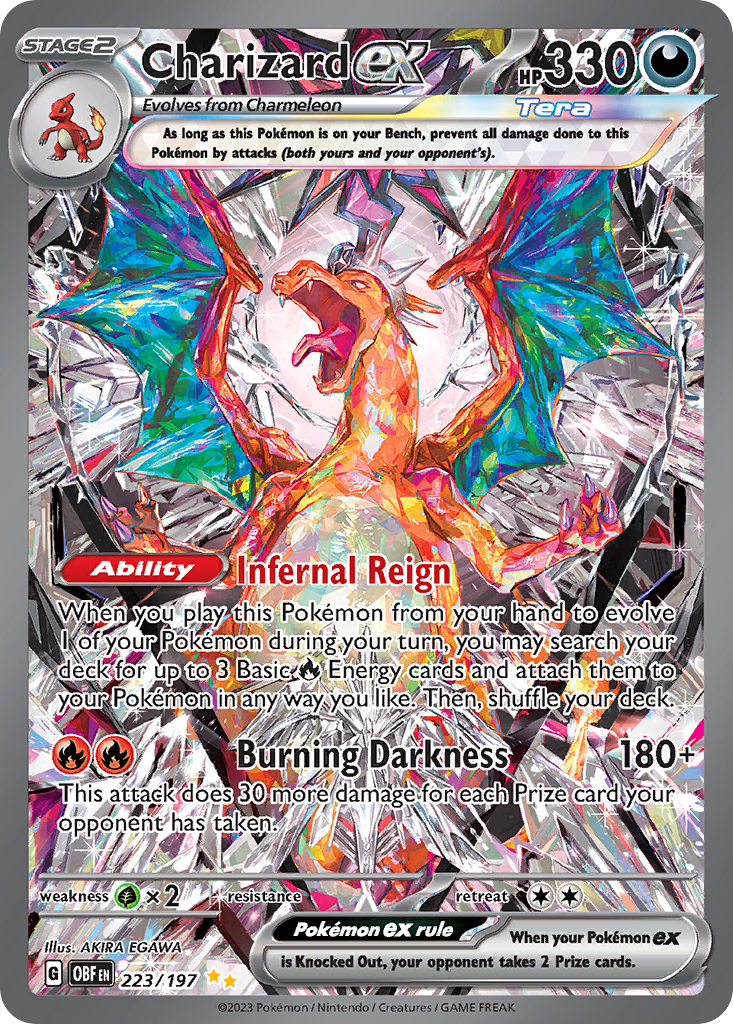
Charizard ex
Special Illustration Rare · EN
Use as a cross-source benchmark: movement matters more when TCGplayer, Cardmarket, and eBay agree.
Marketplace price check
Checking saved data



Next step: Confirm the card version and condition before comparing prices.
Catalog source: Pokemon TCG API card record - Reviewed 2026-07-09
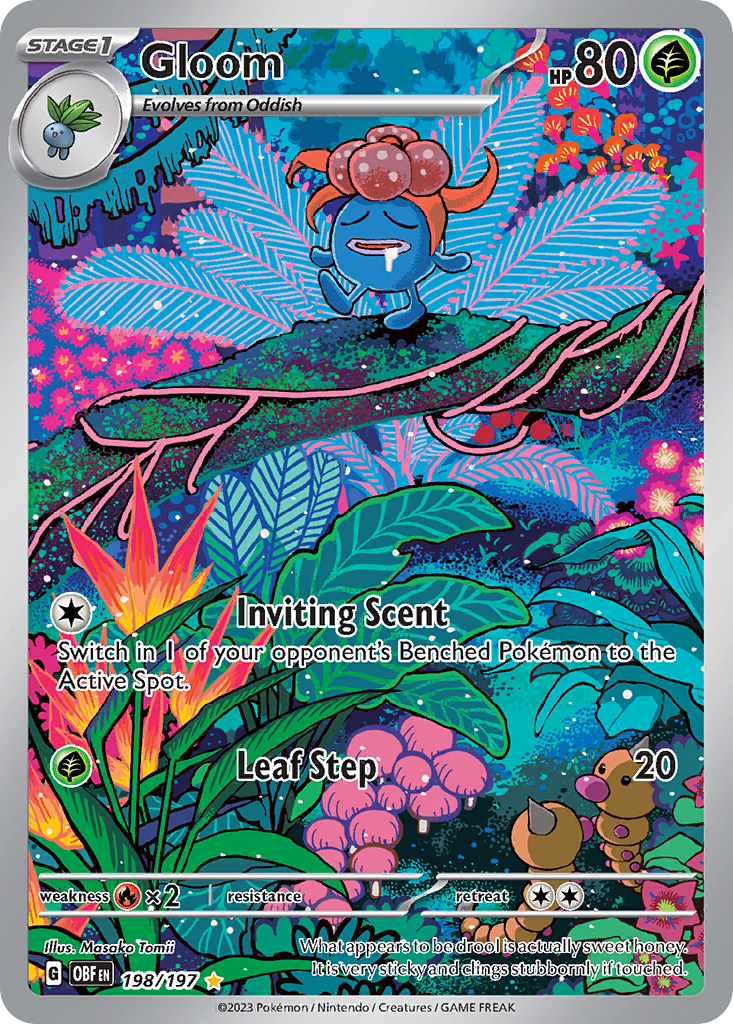
Gloom
Illustration Rare · EN
Use as a calmer comparison point against special-illustration spikes.
Marketplace price check
Checking saved data
Next step: Add as a lower-pressure illustration target before chasing secrets.
Catalog source: Pokemon TCG API card record - Reviewed 2026-07-10
Keep the room stable
The container cannot compensate for a bad location. Use a normal indoor room where temperature and humidity change slowly. Keep cards away from windows, radiators, vents, damp exterior walls, attics, basements, sheds, and parked cars. A small room hygrometer is useful as an early-warning record; it does not turn one percentage into a universal Pokemon-card safety line.
The Library of Congress advises a cool, relatively dry, clean, stable environment for works on paper (opens in a new tab) and recommends avoiding attics, basements, light, tape, and rubber bands. That is conservative institutional guidance for paper collections, not a Pokemon card specification. Its most useful lesson for a collector is to avoid extremes and repeated swings rather than chasing an unsupported exact number.
Light damage is cumulative. A binder on a shelf with an opaque cover is easier to protect than a card kept in permanent sunlight. Display copies still need distance from windows and heat, and the display should be treated as a separate decision from long-term dark storage.
Place binders and boxes without pressure
Support binders upright only when they stay vertical without leaning and their pages are not compressed. Otherwise lay one binder flat without stacking enough weight on it to bow the covers. Never let a loose ring mechanism or an overfilled page press into the cards.
Keep card boxes level, supported, and off a floor that could become damp. Rows should be snug enough that cards remain vertical but loose enough to remove a sleeved card without pinching it. Labels belong on the box or divider, not against the sleeve, and no adhesive should touch a card.
Food, drinks, smoke, pets, and hurried handling are more immediate risks than specialist preservation language. Wash and dry your hands, clear the table, and move one container at a time. Gloves can reduce feel and make a dropped card more likely; clean, dry hands are the practical default for ordinary handling.
Record the location, then leave the card there
Repeated searching creates the handling the storage setup is meant to avoid. Record a plain location such as “Obsidian Flames binder, page 12, centre-right” or “bulk box B, row 2, divider 098–124.” Keep the same label in your collection record and on the container.
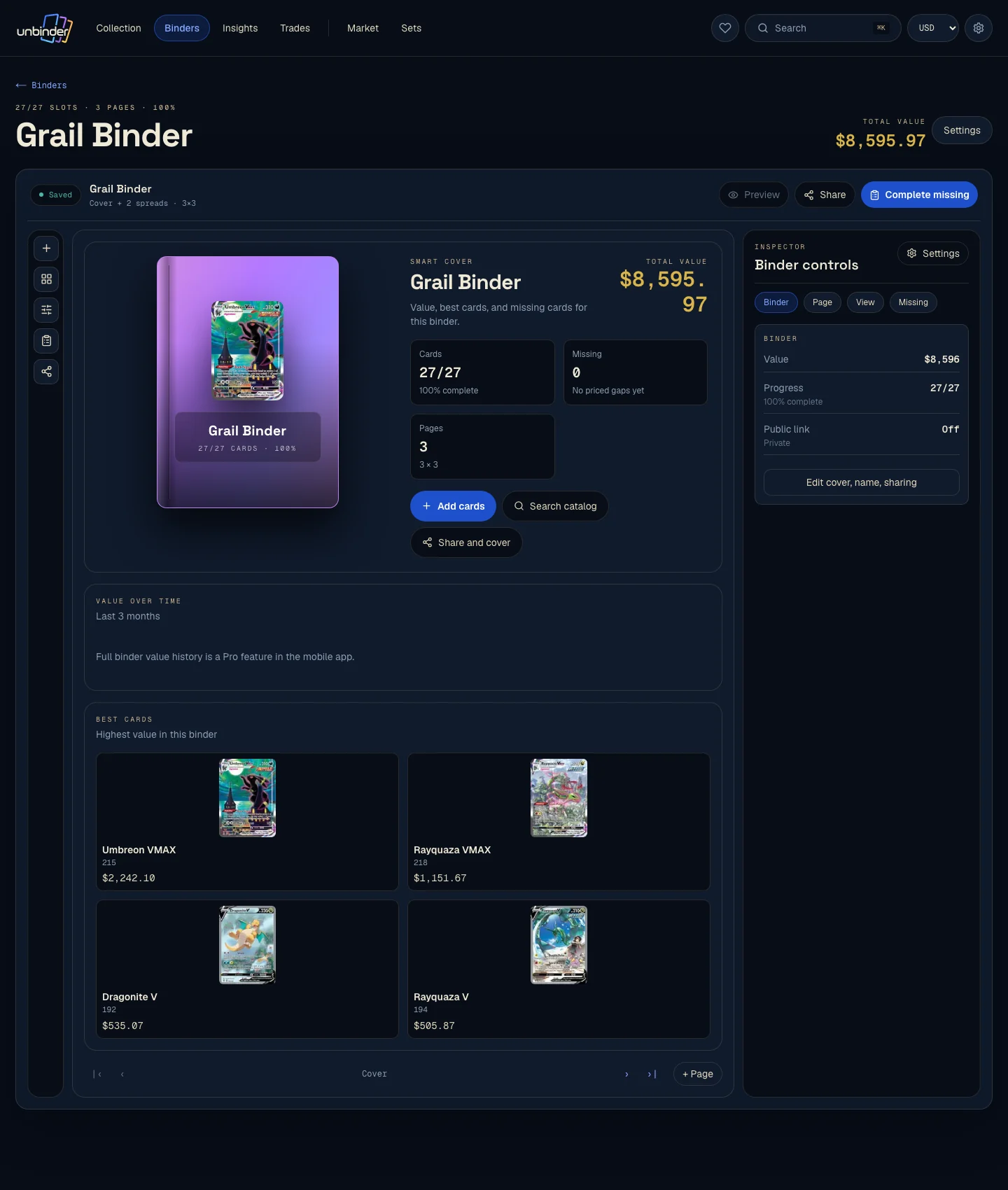
Update the note when a card moves, not when you happen to remember it. The result is deliberately boring: most of the collection stays closed, the six sample cards make changes visible, and a collector can find one named card without pulling every sleeve from the shelf.
Continue this workflow
Best binders for Pokemon cards by collection type