How to make a Pokemon trade binder
A trade binder should make your extras easy to understand without putting your main collection at risk.
A good Pokemon trade binder is a separate binder for cards you may be willing to move, organised around what you would actually part with instead of random duplicates. Keep your main collection stable, pull trade candidates into their own physical binder, mirror them in a digital binder, and use value references before any future trade conversation.
The goal is not to make every card available. The goal is to make your extras clear, protected, and easy to review without accidentally trading something you still need.
Start with cards you can actually trade
Do not build a trade binder from memory. Start by separating cards into three groups:
- Keep: cards that belong in your main collection, set binder, or personal binder.
- Maybe: duplicates, upgraded copies, cards outside your current goals, or cards you would only move for the right offer.
- Trade-ready: cards you are comfortable discussing in a future trade.
The "maybe" pile matters. Many collectors regret trades because they treated every duplicate as spare. A duplicate can still be useful if it completes a page, supports a master set, or has sentimental value.
If your collection is not organized yet, start with how to organize Pokemon cards before building the trade binder.
Keep the trade binder separate from set completion
Your set binder should show progress. Your trade binder should show available options. Mixing them makes both jobs harder.
Use this simple rule:
| Card type | Best place |
|---|---|
| One copy needed for a set | Set binder |
| Favorite personal copy | Personal binder |
| Higher-value card under review | Value-focused storage |
| Extra copy you may move | Trade binder |
| Card you want but do not own | Wishlist or missing list |
A separate trade binder protects your collecting goals. It also makes trade conversations cleaner because you are not flipping through pages of cards that are secretly off limits.
Sort the binder for fast scanning
Trade binders work best when another collector can understand them quickly. Choose a layout that supports review, not just storage.
Useful ways to sort:
- By set for set collectors.
- By Pokemon or evolution line for character collectors.
- By rarity for quick browsing.
- By value tier for higher-stakes conversations.
- By language or finish when variants matter.
- By personal priority, with easier trades in front and harder trades later.
Avoid overbuilding the system. If the binder needs a long explanation, it is probably too clever. A trade binder should be readable in a few minutes.
Protect the cards before showing them
A trade binder is handled more than a storage binder. Build it for movement.
Basic protection:
- Sleeve every card before it goes into a page.
- Use clean side-loading or secure binder pages.
- Avoid overfilling pockets.
- Keep high-value cards in safer storage if the binder will travel.
- Do not carry cards you would be upset to lose or damage.
Condition affects both trust and value. If a card has whitening, dents, scratches, bends, or surface wear, treat that as part of the card's identity. Being clear about condition early keeps future trade conversations calmer.
Price the trade before you offer it
A trade is two purchases at once, so both sides need a number you can defend. Take Charizard ex 223/197 from Obsidian Flames: confirm the collector number against the official Obsidian Flames card list (opens in a new tab) so you are not offering Charizard ex 125/197 by accident, then read what your reference actually measures on Cardmarket's price pages (opens in a new tab). An asking average is not a sale, and a trade settled against one is a trade settled against a hope.
The same discipline decides which of your own copies goes into the binder. Two copies of one printing are rarely equal once condition is written down, and the better one usually belongs in your set rather than in the trade pile.
Card showcase
The card that decides whether a trade is even
Check the set and collector number, compare prices from each marketplace, and decide whether the card belongs on your wishlist or in your binder. One active listing is never the whole market.
Some marketplace links may earn us a commission at no extra cost to you. Compare condition, language, shipping, taxes, and sold results before buying.
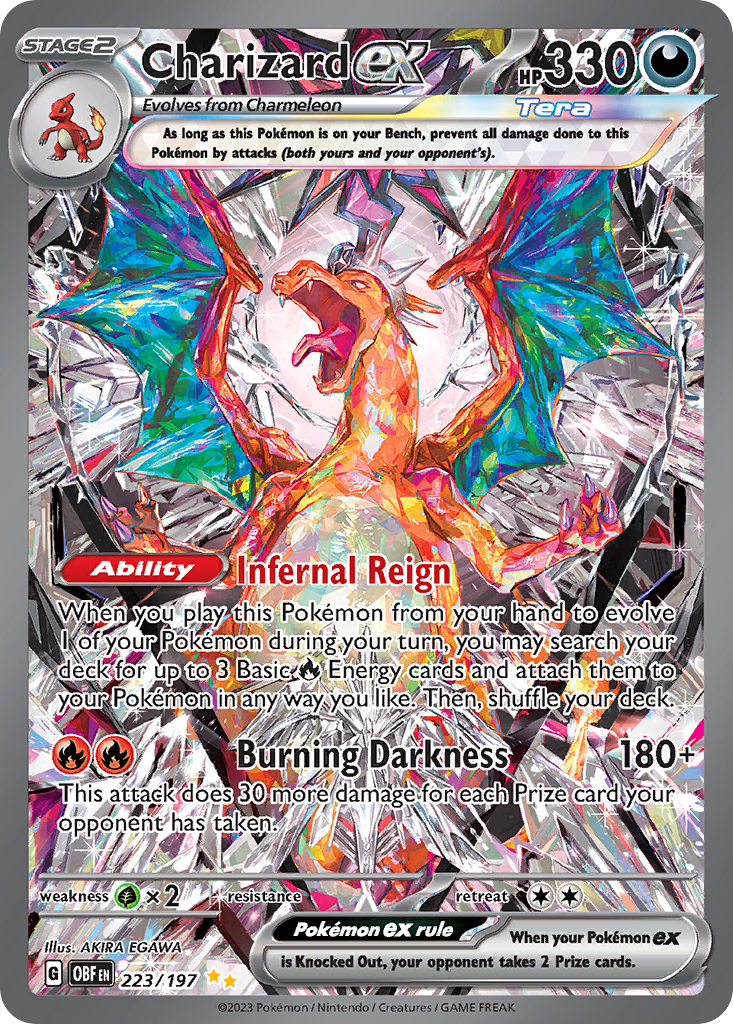
Charizard ex
Special Illustration Rare · EN
Use as a cross-source benchmark: movement matters more when TCGplayer, Cardmarket, and eBay agree.
Marketplace price check
Checking saved data



Next step: Confirm the card version and condition before comparing prices.
Catalog source: Pokemon TCG API card record - Reviewed 2026-07-09
Track condition and value before trading
Before you talk about a trade, know what is actually in the binder. Track the exact card, set, number, finish, language, and condition. Then compare value using references from TCGplayer, Cardmarket, and eBay where relevant.
Value does not have to control every trade. Collectors often trade for art, nostalgia, set completion, or a favorite Pokemon. But value references help you avoid lopsided trades caused by old memory, hype, or a single active listing.
For a deeper method, read how to track Pokemon card collection value.
Use a wishlist to guide what you want back
A trade binder is only half of the system. You also need a clear list of cards you want.
Your wishlist should include:
- Exact card name.
- Set and collector number.
- Language.
- Finish or variant.
- Condition target.
- Priority level.
- Value range you are comfortable with.
That list makes trade conversations more specific. Instead of saying "I am looking for anything cool," you can point to the cards that actually advance your collection.
The Pokemon card wishlist and missing list guide shows how to keep wants separate from cards you already own.
Build a digital version in Unbinder
Unbinder can help you prepare a trade binder without turning it into a messy spreadsheet. Use it as the digital layer for the physical binder:
- Scan trade candidates into a dedicated digital binder.
- Keep your main collection and trade candidates separate.
- Track condition so future discussions start from the same facts.
- Review value references from TCGplayer, Cardmarket, and eBay.
- Keep wishlists or missing lists for cards you would like to receive.
Trading with other users inside Unbinder is in development, so treat this as preparation: a cleaner way to know what you may want to trade, what you still need, and which cards deserve a closer look before a future conversation.
Review the binder regularly
A trade binder goes stale quickly. Cards move, goals change, prices shift, and duplicates stop being duplicates once you start a new set.
Review it after:
- Opening a booster box or large batch of packs.
- Buying singles.
- Completing part of a set.
- Moving cards into safer storage.
- Updating your wishlist.
- Any major price movement on cards in the binder.
Remove anything you no longer want to discuss. Add new duplicates only after checking that they are truly outside your main goals.
Final checklist
Before using a Pokemon trade binder, make sure you can answer these questions:
- Is this card separate from my main collection?
- Do I know the exact set, number, language, and finish?
- Is the condition recorded honestly?
- Do I have a rough value reference?
- Do I know what I would want in return?
- Would I still feel fine if this card left my collection?
If the answer is yes, the binder is doing its job. It is not just a stack of extras. It is a prepared, collector-first view of cards you may be willing to move.
Continue this workflow
Pokemon card wishlist app: build an exact want list