How to start collecting Pokemon cards: a first-week plan
A collector-first workflow for turning scattered cards, lists, and decisions into a system you can trust.
The first cards are rarely the problem. The trouble starts a few weeks later, when the same Pikachu appears in two tins, a binder and an online basket—and you can no longer remember which printing you own. Start with one collecting goal and a small record you can trust.
For most beginners, that means choosing one lane for the next three months: finish a recent set, collect a favorite Pokemon or illustrator, or build a binder of cards you simply enjoy. You can change direction later. A clear first goal protects your budget better than any list of “must-buy” products.
A simple way to begin
- Set a monthly amount you can spend without chasing losses.
- Buy a binder, penny sleeves and a small amount of product you actually want to open.
- Identify every keeper by set and collector number.
- Record what you own before making a wishlist.
- Buy singles when you want specific cards; open packs for the experience.
| If you want to… | Start with… | Avoid… |
|---|---|---|
| Complete a set | One checklist and a missing list | Opening packs after only rare gaps remain |
| Collect a favorite | A focused binder and a budget | Buying every version at once |
| Enjoy the artwork | Cards you like, regardless of price | Letting market rankings choose for you |
Learn the identity of a card
The Pokemon name is not enough. Check the set, collector number, language and finish before you file or buy a card. Two cards can share the same artwork yet belong to different releases; a reverse holo and a regular copy may also count as separate slots in your goal.
The habit is easiest to learn on a card with siblings. Charizard ex 223/197 from Obsidian Flames shares its name with Charizard ex 125/197 and Charizard ex 215/197 in the very same set, and Pikachu 025/165 from 151 exists as both a regular and a reverse holo. Confirm each against the official Obsidian Flames card list (opens in a new tab) or 151 card list (opens in a new tab) and you will never file two different cards in one slot.
Card showcase
The card that teaches a beginner why the number matters
Check the set and collector number, compare prices from each marketplace, and decide whether the card belongs on your wishlist or in your binder. One active listing is never the whole market.
Some marketplace links may earn us a commission at no extra cost to you. Compare condition, language, shipping, taxes, and sold results before buying.
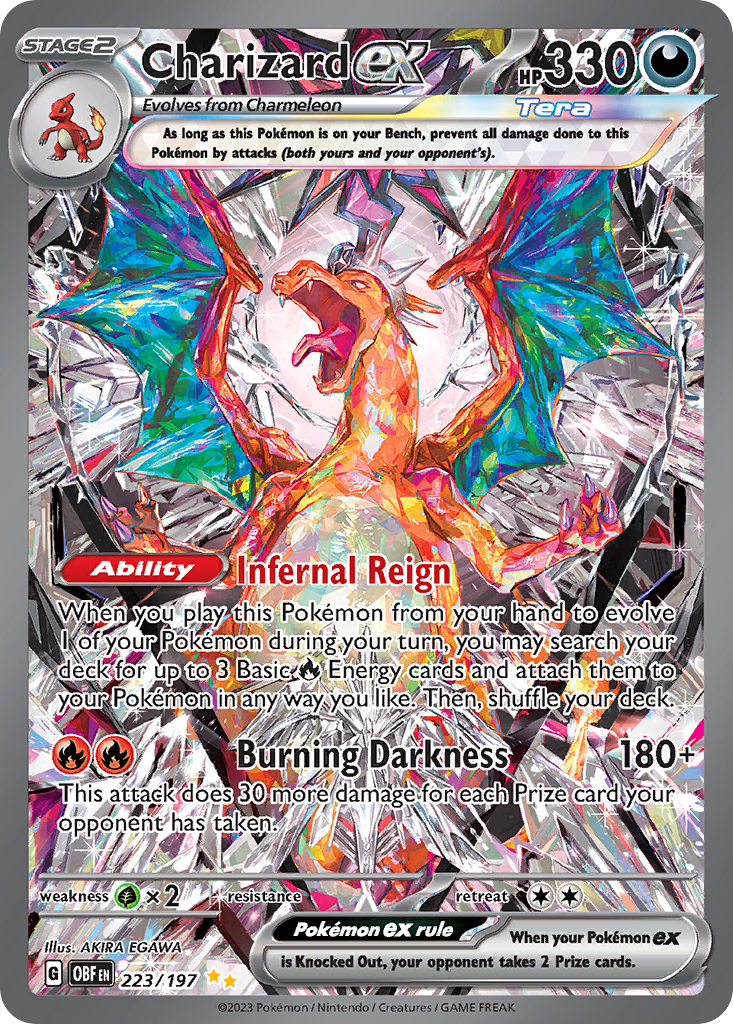
Charizard ex
Special Illustration Rare · EN
Use as a cross-source benchmark: movement matters more when TCGplayer, Cardmarket, and eBay agree.
Marketplace price check
Checking saved data



Next step: Confirm the card version and condition before comparing prices.
Catalog source: Pokemon TCG API card record - Reviewed 2026-07-09
Use the Pokemon set checklist when you are building a set. If you begin with a mixed stack, how to organize Pokemon cards will help you sort it without inventing an elaborate system first.
Protect what matters, not only what is expensive
Sleeve cards you want to keep and use a side-loading, ring-free binder for the collection you handle often. Condition matters for value, but protection is also about enjoyment: a five-euro favorite deserves care if you would be disappointed to damage it.
Keep valuable cards away from moisture, direct sunlight and pressure. Before moving higher-value cards, compare the practical options in the binder guide.
Give every card a place
Your record only needs to answer a few questions: which exact card is it, how many do you own, where is it stored and do you still want another copy? Add condition, language, purchase price or notes when they affect a real decision.
A digital tracker becomes useful here, not at the start of the hobby. Once cards are spread across binders, it can stop duplicate purchases and turn empty set slots into a wishlist. If that describes your collection, compare the workflow in the collection tracker guide and begin with one binder rather than your entire backlog.
Treat prices as context
An active listing is what a seller hopes to receive, not proof of value. Read what a number actually measures before you trust it: Cardmarket's price pages (opens in a new tab) describe a European market built from active listings, which is a different thing from a completed sale. For a meaningful purchase, compare recent sold results, match condition and language, and include shipping and fees. The value tracking guide explains the difference without turning every card into an investment.
The best early habit is a short pause before buying: does this card fit the goal, do I already own it, and would I still want it if the price stopped moving? If the answer is yes, add it to the wishlist—or the binder when it actually arrives.
Your first weekend plan
Pick one binder or stack. Identify the cards, sleeve the keepers and record only the details you will use. Then make a wishlist of no more than ten cards. That is enough structure to prevent most duplicate purchases while leaving room for the hobby to stay fun.
Continue this workflow
How to complete a Scarlet and Violet set